
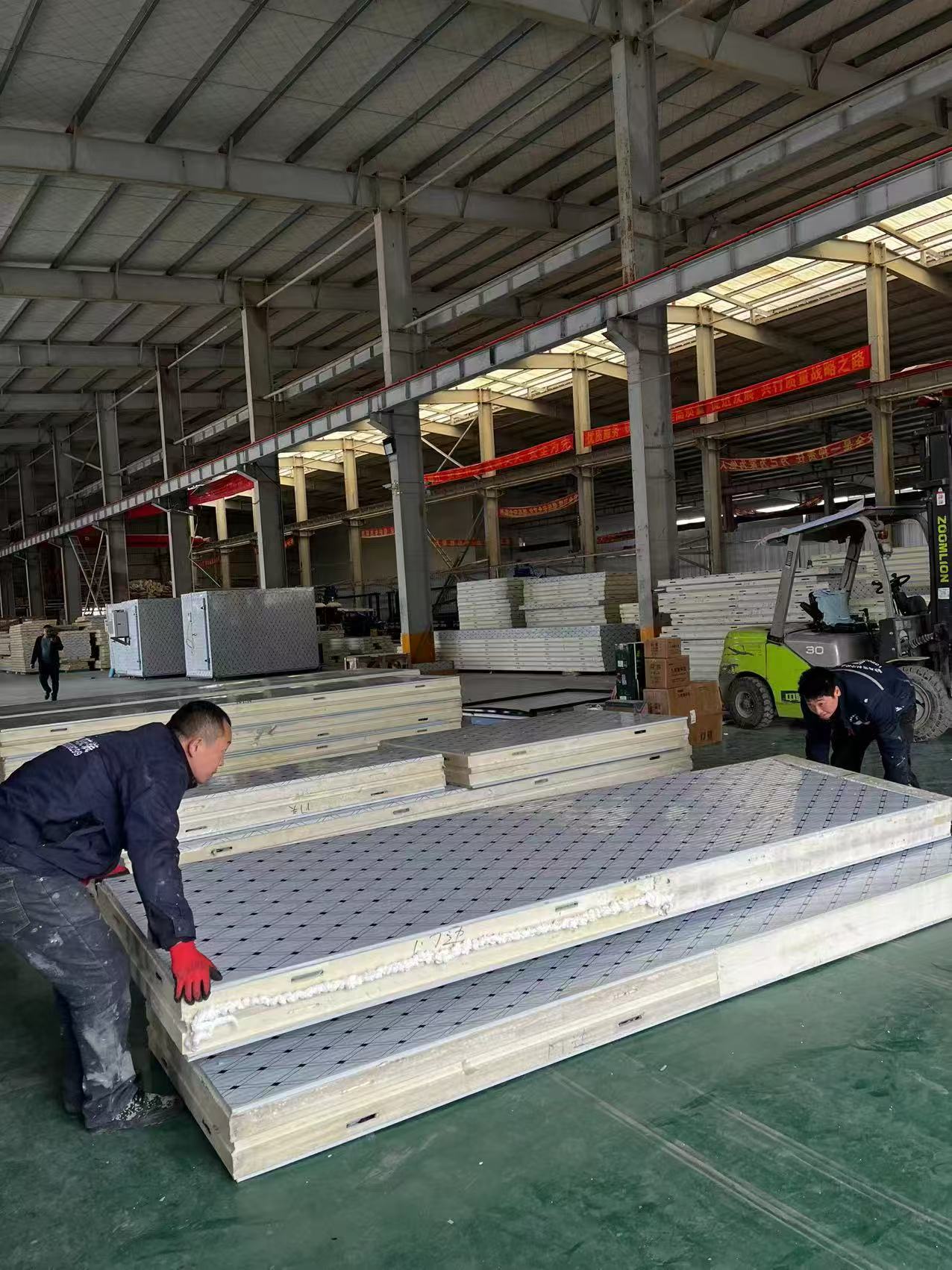
When building a cold storage facility, one of the most critical decisions isn't just the cooling unit—it’s the insulation. The thickness of your Polyurethane (PU) sandwich panels determines how well your cold room maintains temperature and, more importantly, how much your electricity bill will be.
Choosing a panel that is too thin leads to "cold leakage" and compressor burnout. Choosing one that is too thick might be an unnecessary upfront investment.
Here is the definitive guide from Hongya Factory on selecting the perfect PU panel thickness for your project.
1. Why Does PU Panel Thickness Matter?
PU (Polyurethane) is known for its low thermal conductivity. However, its efficiency depends on its density (ideally 40-42kg/m³) and its thickness.
-
Temperature Stability: Thicker panels provide a stronger thermal barrier against external heat.
-
Energy Efficiency: Better insulation means your refrigeration motor works less, extending its lifespan and saving up to 30% in energy costs.
-
Structural Integrity: Thicker panels are generally more rigid, essential for large-scale cold warehouses.
2. The Quick Selection Guide: 50mm to 150mm
50mm - 75mm: The "Cooler" Range
-
Target Temperature: Above 0°C (32°F).
-
Best For: Fruit and vegetable processing rooms, floral storage, clean rooms, or laboratories.
-
Expert Tip: If your local ambient temperature is very high (e.g., Southeast Asia or the Middle East), we recommend upgrading to at least 75mm even for fruit storage to ensure the compressor doesn't overheat.
100mm: The "Gold Standard" for Freezers
-
Target Temperature: -18°C to -25°C (0°F to -13°F).
-
Best For: Meat and seafood frozen storage, ice cream storage, and general frozen logistics.
-
Why it’s popular: 100mm offers the best balance between cost and thermal performance for standard frozen goods. It is our best-selling thickness for international exports.
150mm - 200mm: The "Deep Freeze" Specialist
-
Target Temperature: -30°C to -45°C (-22°F to -49°F).
-
Best For: Blast freezers, medical-grade ultra-low temperature storage, and tuna/high-end seafood freezing.
-
The Benefit: At these extreme temperatures, the "thermal bridge" effect is aggressive. 150mm+ panels with high-precision cam-locks are mandatory to prevent ice buildup at the joints.
3. Beyond Thickness: What Else Should You Look For?
Thickness is only half the story. To get a truly "high-performance" cold room, pay attention to:
-
The Cam-Lock System: At Hongya Factory, our panels feature high-precision cam-locks that pull panels together for a near-seamless fit.
-
Fire Rating: Does your project require B1 (hardly flammable) or B2 (flammable-retardant) ratings? Our PIR and PU panels are tested to meet international safety standards.
-
Surface Material: Choose from Color Steel, Stainless Steel 304 (for food/medical hygiene), or Embossed Aluminum (for heavy-duty floors).
4. Summary Table for Quick Reference
| Storage Type | Recommended Temp | Suggested Thickness |
| Processing Room / Fruit | 5°C to 15°C | 50mm / 75mm |
| Chilled Meat / Vegetable | -5°C to 5°C | 75mm / 100mm |
| Standard Freezer | -18°C to -25°C | 100mm / 120mm |
| Blast Freezer | -30°C to -45°C | 150mm / 200mm |
Conclusion: Get a Customized Thermal Calculation
Don't guess your insulation needs. Factors like local humidity, door opening frequency, and product type all play a role.
At Hongya Factory, we don't just sell panels; we provide engineering peace of mind. Our team can provide a full 3D design and thermal calculation for your specific project.
Ready to start your cold storage project? [Contact our engineers today for a Free Quote & Technical Consultation!]